

Glass Polishing and the Environment
Beside saving both time and money against fitting replacement glass, repairing scratched glass is great for the environment.
The U.K Glass Manufacturing Industry, probably one of the most environmentally conscious in the world today, currently produces an average of 30,269 tonnes of glass per day. In 2015, when we first started to research these figures, it was estimate to be 10,137 tonnes per day with a 20% year-on-year growth. This means that by 2025, the U.K alone will be producing 62,766 tonnes of glass per day.
It has been estimated that each tonne of glass manufactured, processed and delivered to the end user produces 1.65 tonnes of CO2 or carbon emissions. Since we started looking into these figures, we have found that this estimation is way off and relates only to the emissions produced during the firing process of the glass kilns. When you factor in the mining of the raw materials used to manufacture glass, transport these materials to the various manufacturing plants, the transport of the manufactured glass to the processing plants, the processing and onward transport to the end user, the amount of Co2 produced in the process of glass manufacture is almost 7/1.
7 tonnes of CO2 for every tonne of glass manufactured.
At this point we should point out that obtaining exact figures for or from the glass industry is very difficult and it is not an issue that many people feel comfortable talking about, so much of our calculation as been made using educated estimates on the usage of different mining equipment and the fuel consumption of various transport vehicles. Try working out the diesel consumption of a container ship per tonne of cargo per mile traveled. So for those of you that love to pick fault in everything, please allow us a little latitude here, we are glass polishers, not climate scientists, but we have done our best to research these numbers as logically as possible. What's more our research has thrown us a bit of a curve ball, which we discuss here, but for now, let's move on.
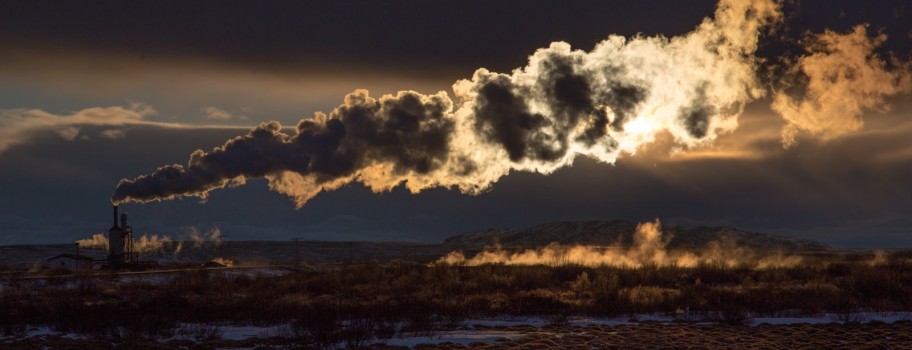
Another key consideration is that we import more glass in the U.K than we produce. Most of this imported glass come from countries such as China where the environmental impact of production does not figure very highly on their list of priorities. The point is that although we are discussing the U.K glass market, our glass usage and therefore our carbon responsibility is far greater than the figures we estimate here.
So this year, 2021, we can expect to produce 30,268 tonnes of glass per day in the U.K, producing 211,882.65 tonnes of CO2 emissions per day. To try to put these numbers into context, if we take an average family car, according to Google this would be a 2015, 1.8 Diesel, producing an average 185 grams of CO2 per mile. To match this level of emissions we would need to drive our average family car 3,835,625 miles a day. A little further than your average warranty.
Or to try a different context, the average consensus appears to be that 1 tree (what age or type nobody appears to have thought about) will absorb around 14.5 kilos of CO2 over 1 year. This means that it will take 14,612.6 trees a year to absorb the CO2 produced by the U.K Glass Manufacturing Industry in 1 day. Or, 3,740,824.7 trees 1 day to absorb 211,882.65 tonnes of CO2 emissions.

We could go on and on quoting statistics and numbers about pollution, carbon emissions and how we are killing the planet, but the truth is that we are never going to stop pollution. We need and rely too heavily on products, services and luxuries that cause pollution of some kind or other. Apparently nearly 16% of all greenhouse gas emissions come from cows and sheep, with your average cow producing up to 1500 litres of CO2 and 350 litres of Methane per day. This is according to the New Zealand Flatulence Tax figures. I know, the mind boggles. I hope Boris does not adopt this idea. If he does the wife will have to go.
Harping on about the evils of glass production is pointless. It is a necessity in today's world and it's benefits far outweigh it's cost, both financial and environmental. Finished glass is inert and non-toxic. It is easy to clean and maintain, having a dense surface, which inhibits contamination. Glass is the prime ingredient in 'passive solar' designed buildings, that harness the heat of the sun to warm structures without the need for machine based heating and air conditioning.
Glass is also hugely versatile and provides quicker and cheaper building methods for modern construction. Just take a look around you and see how many buildings use glass as their primary component.
But probably most of all, given that the average person now spends 90% of their time indoors, the sanity provided by being able to see more of the outside world is worth more than any therapist and is proven to boost employee productivity and sense of well being.

In reality, the best we can do is look at ways to limit or offset the pollution we do cause. We are never going to stop using our cars, we will continue to drink milk and eat meat, and as we have no viable alternative for glass, we will continue to manufacture this too.
Repairing scratched glass reduces the amount of glass we needs to manufacture, which in turn reduces CO2 emissions.
Repairing scratched glass is not going to save the planet, but it does help and that's the important thing. In an age when we are all expected to do our bit for the environment, glass polishing offers a solution that not only saves time and money, it offers a genuine alternative to replacing scratched glass.
Think of it this way, each square meter of double glazing that you have repaired instead of replaced will do the same job as 4229 trees do in a day.
Do you need to know more?
We love talking about scratched glass repair.
Sign up to our Newsletter
(We do not share your data with anybody, and only use it for its intended purpose)